A man leaves home, built two ways in Seedance
The brief was simple: a fifteen second spec ad where a man walks out of his house, gets in his car, and drives off. I gave myself one day to build it two ways, in two different AI engines, and to learn the thing I actually cared about, which is how you direct AI video instead of just rolling the dice on it. The two finished cuts are above: first Higgsfield driving Seedance 2.0, then ComfyUI driving Seedance 2.0. Everything below is how they were made, and every version it took to get there.
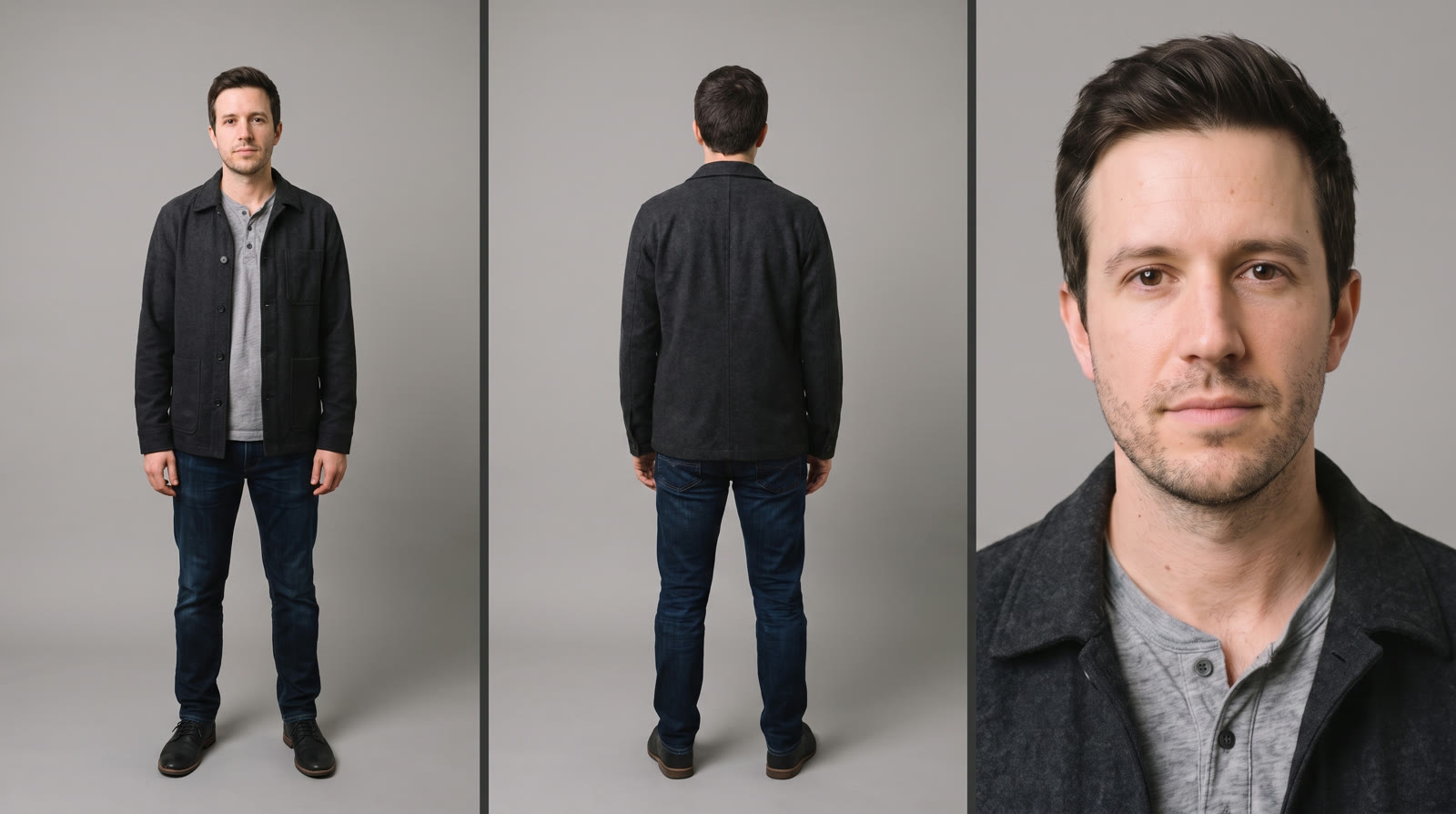
Before either engine could render a frame, I built the cast. Nathan is the character, made from scratch as a clean three panel sheet, front, back, and face, shot flat on neutral gray. The car is a legally distinct rugged SUV, redrawn after a first pass drifted into a recognizable real brand. The world is a golden hour suburban street. The rule I kept all day: feed the engine clean neutral references, never a frame with scene lighting already baked in, or that lighting follows you into every shot.
Then I drew the plan. Eight panels, one per shot, from the wide establishing on the house to the taillights vanishing down the street. It looks rough on purpose.
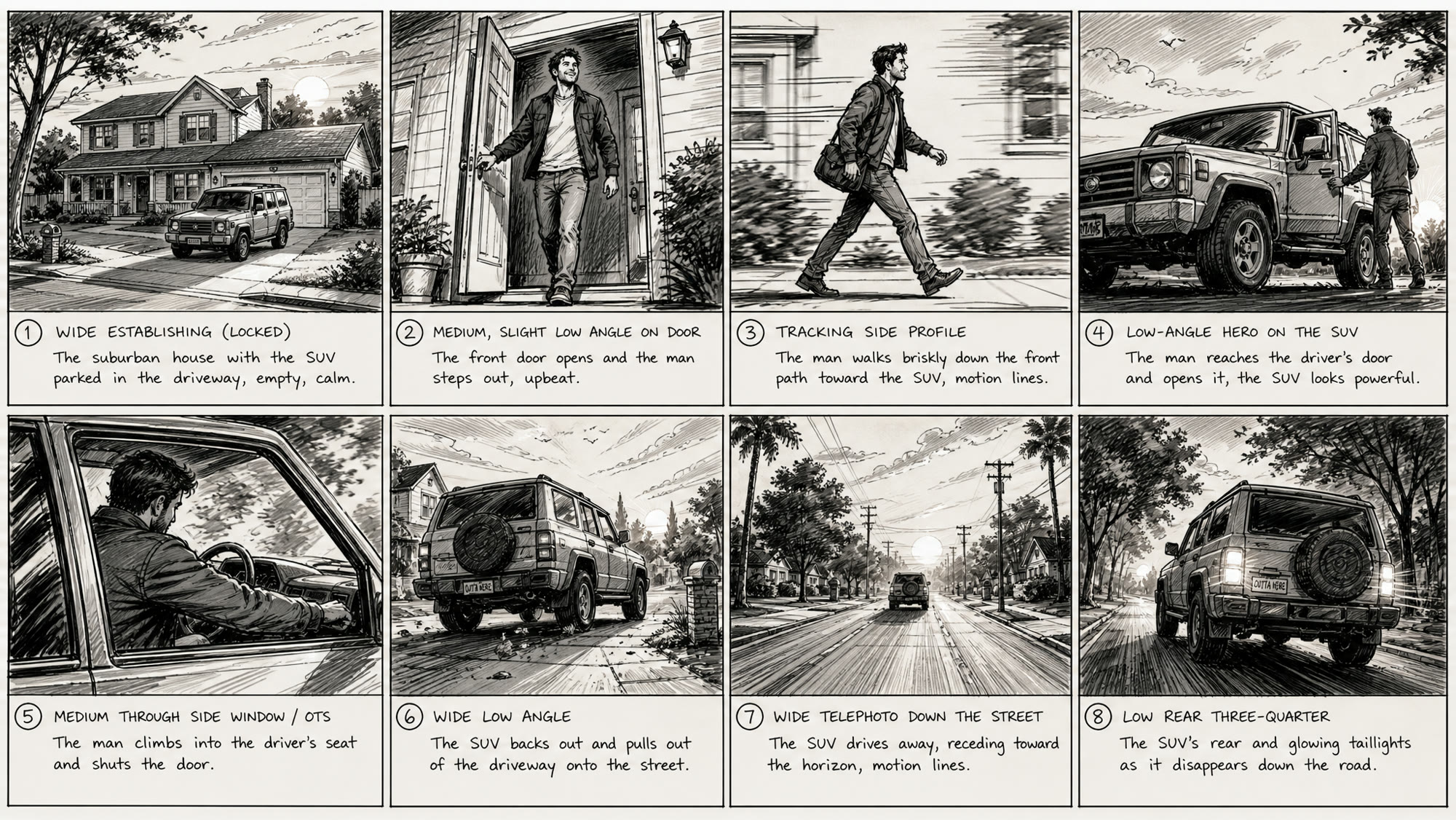
The biggest lesson of the day hides in that sketch. A storyboard does not reproduce itself. Seedance follows whatever you hand it as the primary reference, so if you make the character the primary image, it ignores your board and improvises. The move that works, straight from the official template, is to make the storyboard the primary image and the character the secondary one, then let an LLM write the shot progression from there. And the board has to stay a rough sketch. Because it is obviously not final, the engine treats it as blocking only and does not drag its pencil look into the render.
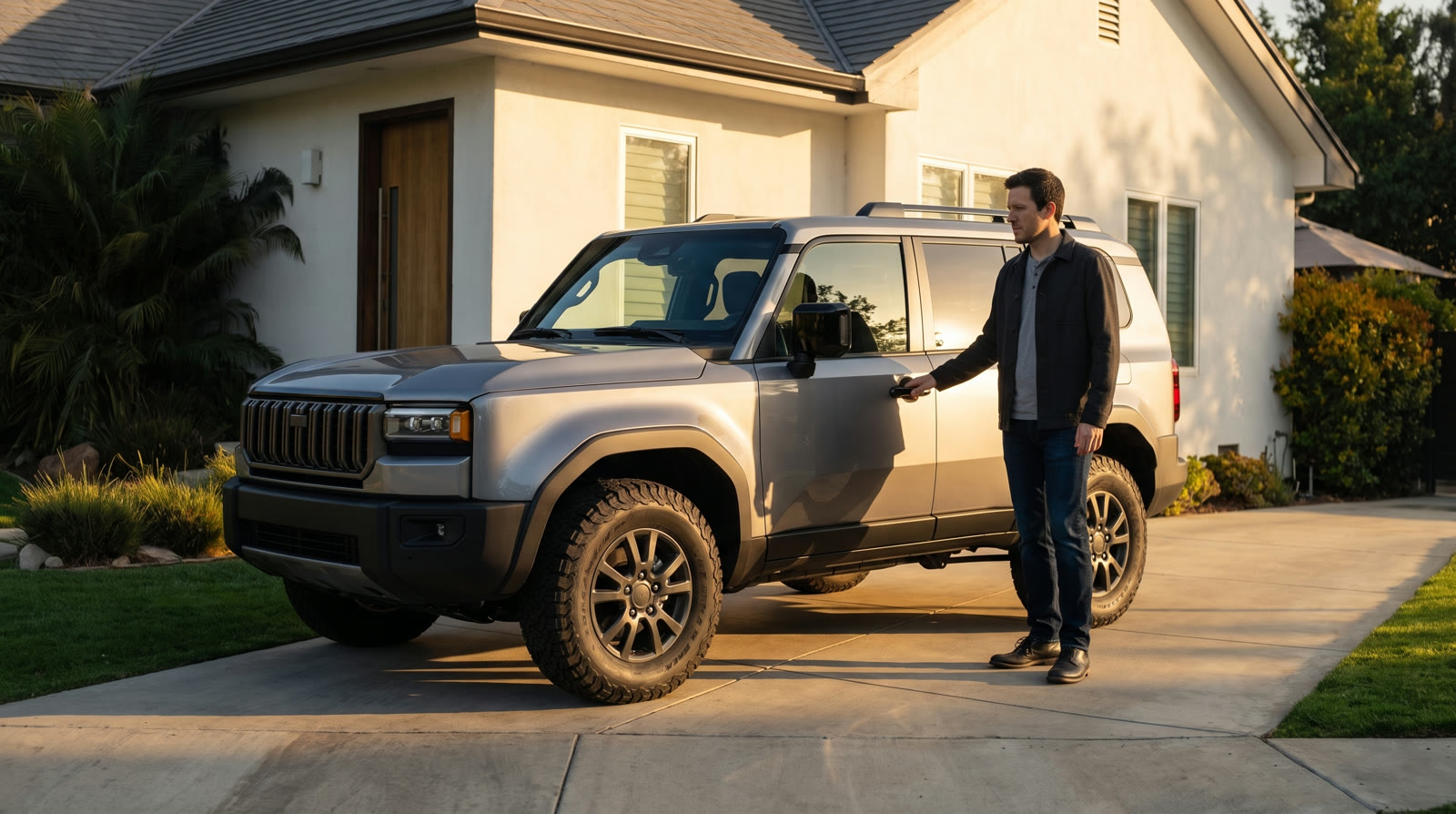
On the Higgsfield side I locked continuity with keyframes, still frames that turn each panel into a composed, photoreal shot before any motion is generated. This is where the character lock is tightest. Same face as the sheet, same SUV, real golden hour on the driveway.
The first Higgsfield cut broke, and the break taught me the most. I pinned a mismatched start and end frame to each beat and ran a traveling camera, so instead of animating, Seedance morphed between the two compositions and the house visibly warped as the camera moved, because a moving camera re-hallucinates the geometry on every frame.
The fix was discipline, not a better prompt. Lock the camera, one action per shot, keep each clip to three to five seconds, and cut many simple shots together. The energy comes from the edit and the subject, not from a wandering camera. Here are the three locked shots that cut into the Higgsfield version up top.
The ComfyUI version took the opposite bet. I reused only Nathan and invented the street and the car fresh in the prompt, driving the whole thing from a black and white previs storyboard the way the official template intends. As one continuous generation it gives a fresher world and more varied coverage, but it drifts: door swings that do not match, the occasional day to night jump, physics that wander. It took three passes to reach the keeper up top. The first two are here.
I also tried the per shot method inside ComfyUI, rendering single beats short and clean instead of one long take. Same lesson as Higgsfield: small simple shots hold together where a long one falls apart.
So the method is proven, not finished. The workflow that holds up is clear now: storyboard as the primary image, character as the secondary one, and render each shot short and simple, then cut it like real footage. Next is to rebuild the whole spot as per shot three to four second clips, re-roll the misses, edit them together, and upscale the keepers through Topaz. One honest day, two engines, every version kept, and a repeatable way to direct the machine instead of hoping.